
Stump size and condition
The operator considers the stump diameter, height, species where known, root flare, decay and whether soil or stones are embedded around it. Broad, hard or multi-stemmed stumps generally require more cutting time.
Serving Logan City, Queensland & surrounding areas
Clear unwanted stumps with careful planning, suitable machinery and a practical finish matched to how you intend to use the ground.
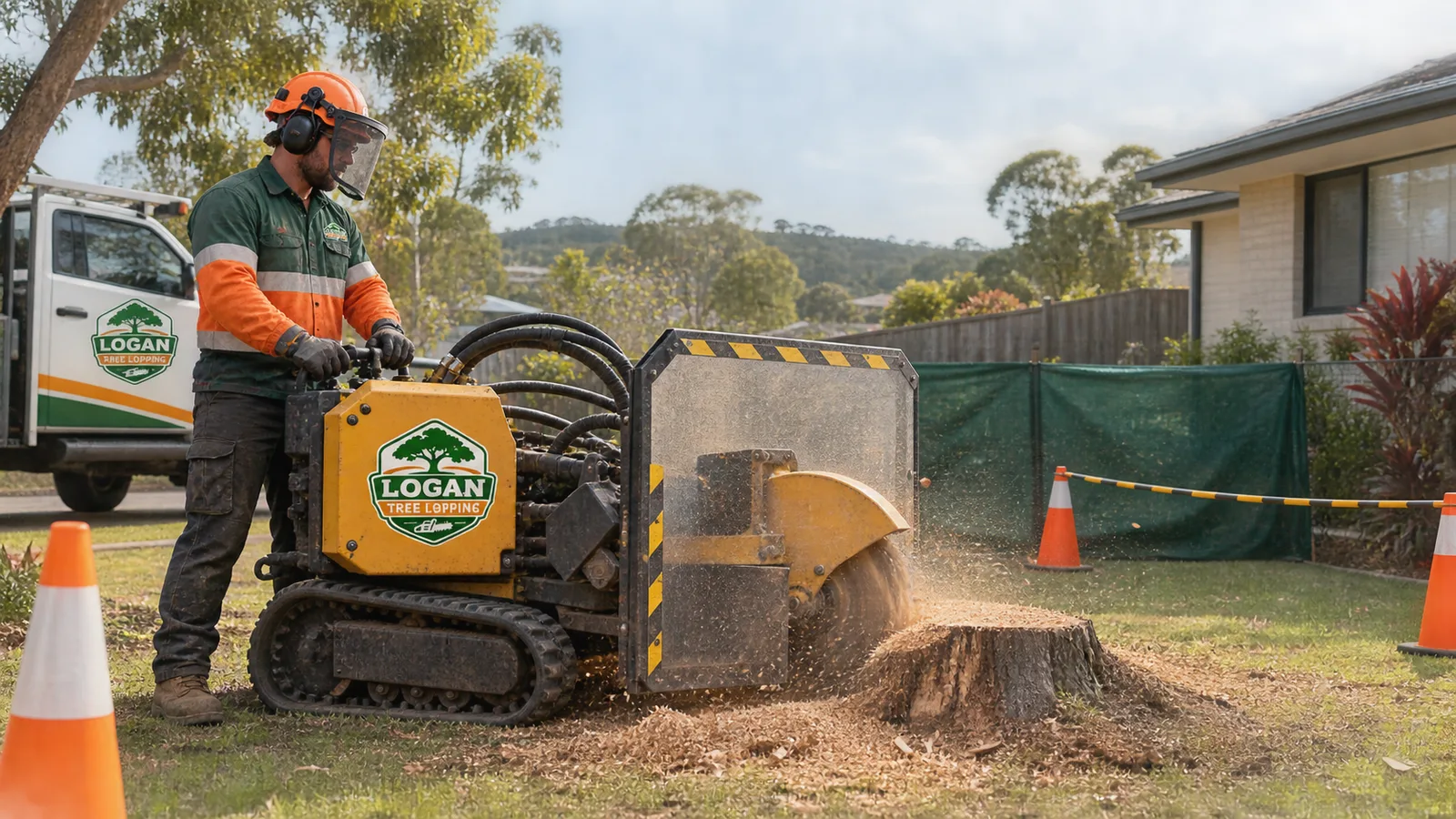
Stump removal in Logan clears the tree remains that can obstruct mowing, interfere with landscaping and take up useful space. Logan Tree Lopping assesses the stump, access route, surrounding structures and intended finish before recommending a removal method.
We are an experienced tree lopping team in Logan City that plans the work around real site constraints rather than treating every stump alike. A small stump beside an open driveway is different from a broad stump close to paving, a fence or buried services. The quotation should state which stumps are included, the expected grinding depth, what happens to the grindings and whether surface roots are part of the scope.
Logan City includes compact suburban blocks, larger residential properties and semi-rural land. Access can range from a clear side gate to a narrow route between buildings. Warm, wet conditions can also encourage remaining roots and some species to reshoot. Identifying the tree where practical helps determine whether follow-up treatment or monitoring may be needed.
Stump grinding is usually the practical choice for established residential ground. A grinder uses a rotating cutting wheel fitted with hardened teeth to reduce the stump to wood chips. The operator works progressively across the stump and below the surrounding surface to the depth agreed in the scope.
Grinding causes less ground disturbance than excavating the entire stump and root plate. It commonly suits lawn reinstatement, garden preparation and removal of a trip or mowing obstruction. Large lateral roots can be chased and ground when they affect the planned use, but this needs to be specified because the machine will not automatically remove the whole root system.
Complete excavation removes more of the root mass but requires room for digging equipment, creates a larger hole and produces heavy material that may need transport. It may be considered where structural work, a pool, drainage or deep excavation is planned. Final suitability depends on the project requirements and the location of underground services.
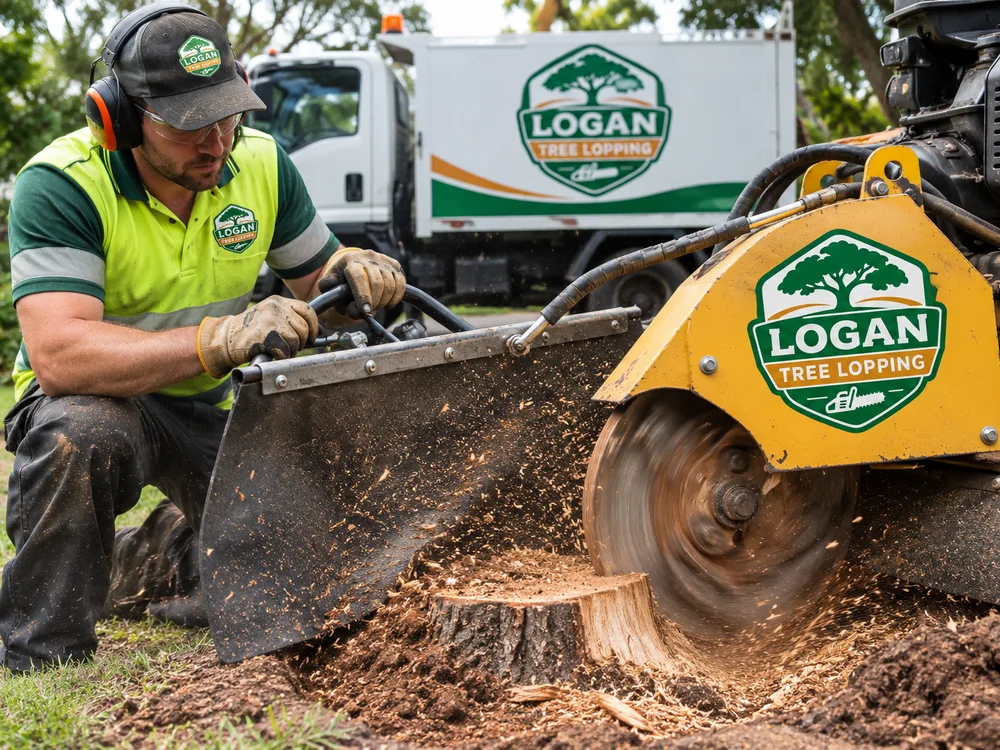
The operator considers the stump diameter, height, species where known, root flare, decay and whether soil or stones are embedded around it. Broad, hard or multi-stemmed stumps generally require more cutting time.
Gate width, steps, slopes, soft ground, retaining walls and tight turns can determine which machine is suitable. The route also needs enough clearance for safe movement without damaging nearby surfaces.
Fences, glazing, vehicles, garden edging and paving need protection from flying debris and machine contact. Screens and exclusion zones help keep the work area controlled.
Stump work can intersect electricity, gas, water, communications or private irrigation. Before You Dig Australia can provide plans for registered assets, but owners must also identify private services that may not appear on those plans.
Grinding for turf differs from preparing ground for a garden bed or future construction. The intended use determines the useful depth, root treatment and whether clean fill will be required after settling.
Grinding creates a mixture of wood fibre and soil. The agreed scope should say whether this material is left, spread, removed or used to partly backfill the hole.
Stump removal in Logan City typically costs about $150 to $500 for a straightforward small or medium stump, while large, difficult or multi-stump work may range from $500 to $1,500 or more. These are general, non-binding estimates.
Diameter, timber hardness, root spread, grinding depth, machine access, slope, embedded objects and waste removal change the final price. Multiple accessible stumps may be priced more efficiently in one visit. The exact cost is confirmed after the stump, access route and required finish have been assessed.
A defined process keeps access, underground services, grinding depth and the required finish clear before machinery begins work.
Provide the number and approximate size of the stumps, their location, access width and any nearby structures. Photos can help with initial planning, although an inspection may still be needed.
The operator identifies the suitable method, expected depth, surface-root treatment, debris handling and access requirements. Known underground and private services must be located before grinding begins.
Movable items are cleared, the machine route is checked and guards or screens are positioned. People and pets need to remain outside the exclusion zone while the grinder operates.
The cutting wheel removes the stump in controlled passes. Exposed roots included in the quotation are addressed, with extra care around paving, fences and retained plants.
Grinding material is managed as agreed and the area is left ready for the next planned use. Because loose grindings settle and decompose, extra soil may be needed before laying turf or building up a garden bed.
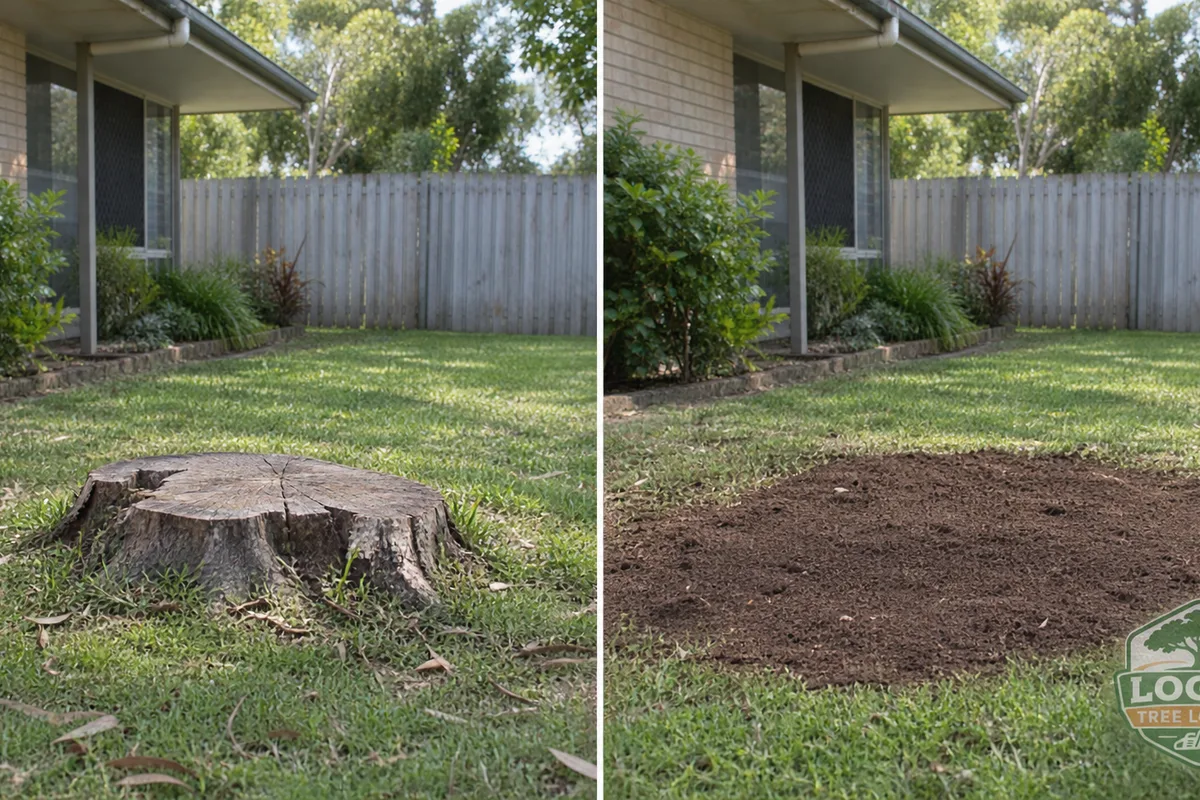
The right endpoint is not simply making the visible stump disappear. For lawn repair, the loose wood and soil mixture usually needs to be reduced or removed before clean topsoil and turf are added. Wood-rich backfill decomposes and can settle, so immediate turf laid over a deep pocket of grindings may sink later.
Garden areas may tolerate some organic material, but the choice of replacement plant matters. Planting a new tree directly into the old stump position can be difficult because remaining roots occupy the soil and decomposing woody material changes the planting zone. Moving the new planting position is often more practical.
Construction requires a different standard. Grinding does not create certified structural fill and does not prove that the entire root plate has been removed. If a slab, retaining structure, pool or footing is planned, the relevant contractor or engineer should specify the excavation and compaction requirements before stump work is quoted.
Logan City properties vary greatly in access and ground conditions. Established residential areas such as Springwood and Rochedale South can have mature gardens, side access and nearby paving that limit machine movement. In acreage localities such as Greenbank and Chambers Flat, the travel distance across the property and soft or uneven ground may be more relevant. Beenleigh properties can range from compact blocks to larger sites, so photos of both the stump and access route are useful when arranging an assessment.
South East Queensland storms and heavy rain can leave soil saturated. A heavy machine on soft ground may rut a lawn, lose traction or damage paving edges, so work may need to wait until access is stable. Dry conditions do not remove the need for care because the cutting wheel can throw chips, soil and small stones. Protective guarding and a clear exclusion zone remain necessary.
Council-managed land, street trees and trees near property boundaries require extra care. Removing a stump does not settle ownership or approval questions. If the stump is outside your boundary, associated with a protected tree, or potentially within a road reserve, confirm authority with Logan City Council or the relevant landowner before arranging work.
A clear quotation should identify the stump, access requirements, grinding depth, root treatment and debris handling before machinery arrives.
Call for a Free EstimateA straightforward, accessible stump may be ground during a short visit, while large stumps, restricted access or several stumps can require much longer. Diameter, timber hardness, root flare and the required depth all affect the schedule. Wet ground after heavy South East Queensland rain may also delay machinery access to protect lawns and paved edges.
The correct depth depends on what will replace the stump. Shallow grinding may remove a mowing obstruction, while turf or garden preparation generally needs enough depth for unsuitable grindings to be removed and clean soil added. Future slabs, pools, footings or retaining structures require project-specific excavation advice because ordinary grinding does not remove the complete root plate.
Compact stump grinders can use some residential side access, but the clear width, turns, steps, slope and overhead clearance must be checked first. Nominal gate width alone is not enough because hinges, pipes, air-conditioning units and garden edging can narrow the route. Photos and measurements of the tightest point help identify suitable equipment.
Yes, underground and private services must be identified before grinding begins. Before You Dig Australia can supply plans from participating asset owners, but private irrigation, pool lines, shed power and owner-installed cables may not appear. Tell the operator about every known service and arrange specialist locating when its route is uncertain.
Grinding removes the stump to the agreed depth, but it does not remove every root and some tree species can produce shoots from remaining roots. Species, stump condition and prior treatment affect regrowth risk. Any new shoots should be addressed early using an appropriate method rather than repeatedly mowing over woody growth.
Some grindings can be used as temporary backfill if that finish is agreed, but the material will decompose and settle. It is generally unsuitable as the sole base beneath new turf, paving or structural work. For lawn restoration, excess wood fibre is usually removed or reduced before clean topsoil is placed and compacted appropriately.
A stump beside a fence or paving may be removable, but the available working angle and root position need inspection. Grinding too close to concrete, metal posts or hidden footings can damage cutting teeth or nearby assets. The scope may require partial removal, hand preparation or a defined limit around the obstruction.
Tell Logan Tree Lopping about the stump, access route and intended use of the area. You will receive a practical scope based on the site rather than a one-size-fits-all finish.