Trees on homes or sheds
Weight must be removed in a controlled sequence to avoid causing further damage to roofing, walls or supporting frames.
Serving Logan City, Queensland & surrounding areas
Prompt help for fallen trees, storm-damaged limbs and unstable trees threatening people, buildings or access.
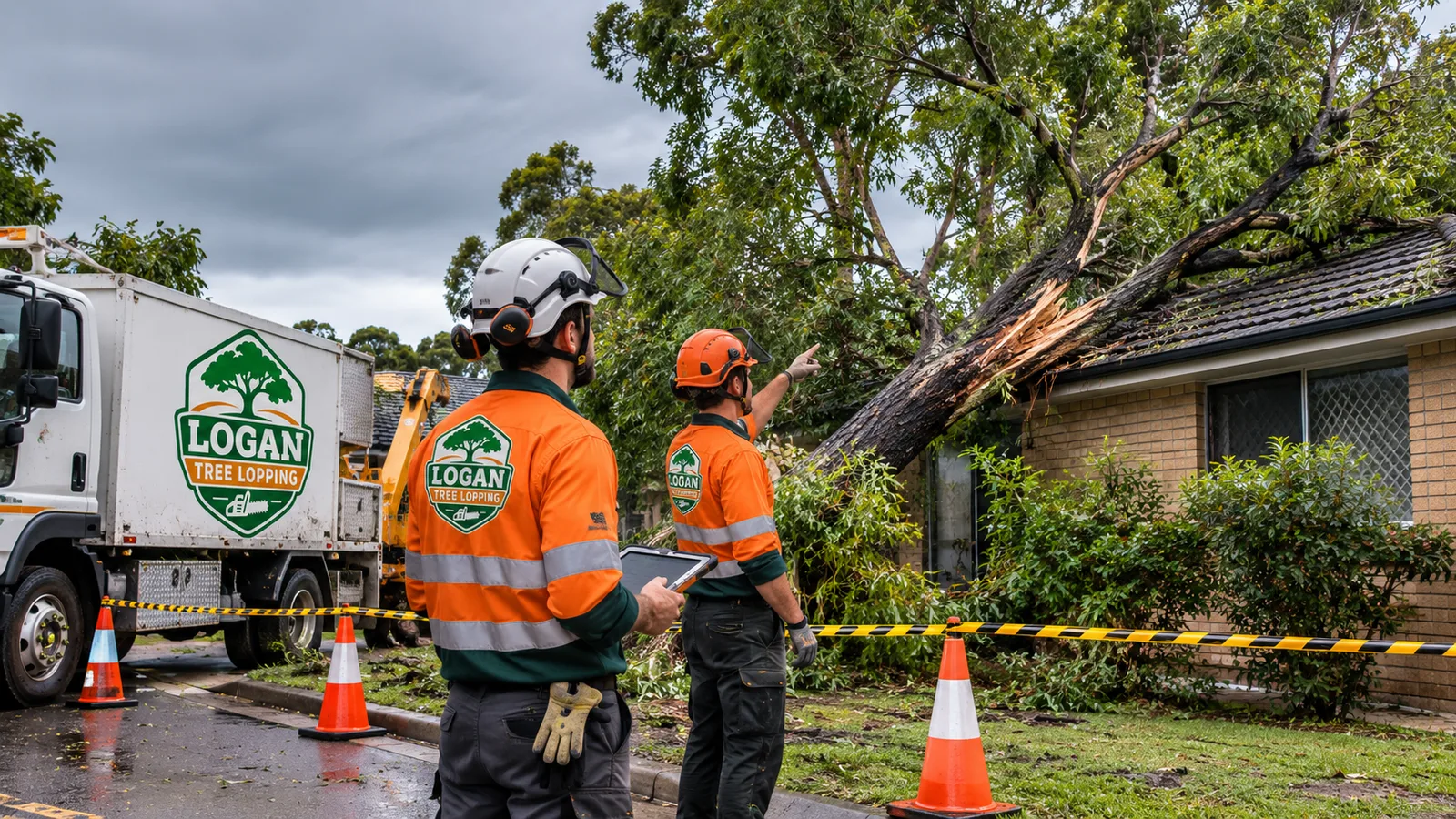
Emergency tree removal Logan property owners request usually follows sudden wind damage, uprooting, trunk failure or the collapse of a heavy limb. The first priority is to keep people away from the hazard. Do not walk beneath hanging branches, touch a tree resting on utility infrastructure or attempt to cut timber that is bent, split or supporting another part of the tree.
Logan Tree Lopping provides practical assessment and hazard removal for urgent situations across Logan City. Our tree lopping specialists across the Logan City area plan the work around the tree's condition, nearby structures, access and any immediate electrical risk. The safest method may involve controlled dismantling, rigging or crane assistance rather than felling the tree in one piece.
When making contact, explain what has happened, what the tree is touching and whether the site can be entered safely. Photos taken from a safe position can help with initial planning. If a tree or branch is contacting powerlines, keep well clear and report the electrical hazard to Energex before arranging work near the affected area.
A fallen tree blocking a driveway is obvious. Other failures are less clear but can be just as dangerous. Fresh cracks through a trunk union, exposed roots after the ground has shifted, a sudden lean, suspended branches and major limbs resting on a roof all warrant prompt assessment.
Storm conditions can leave branches under compression or tension. Cutting the wrong point may cause the timber to roll, split or spring without warning. Trees caught in fences, sheds or neighbouring canopies can also change position as weight is removed. A trained crew identifies these load paths before making the first cut.
Urgent removal may be appropriate when the tree cannot be stabilised and poses an immediate risk. If the tree is damaged but stable, the work may be scheduled rather than treated as an active emergency. The assessment determines whether the whole tree must come down or whether removing a failed section will make the area safe.
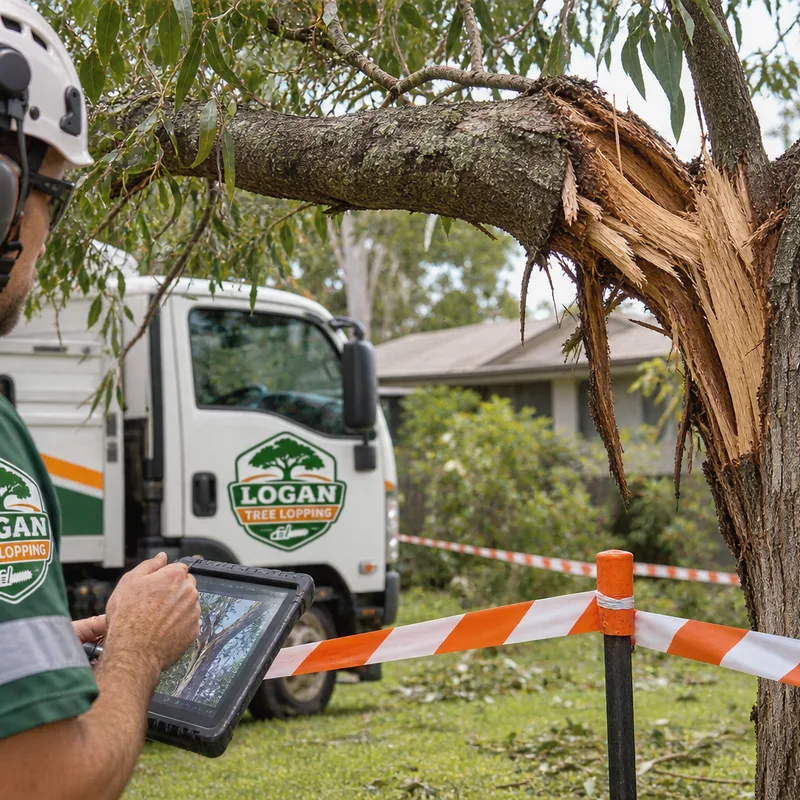
Weight must be removed in a controlled sequence to avoid causing further damage to roofing, walls or supporting frames.
A fallen trunk across a driveway or private access route may need staged cutting and machinery to reopen a safe path.
Broken limbs caught in the canopy can fall with little warning, especially when wind moves the remaining crown.
A cracked trunk, lifted root plate or sudden lean may indicate that the tree has lost structural support.
Any tree touching powerlines or electrical service cables requires extra clearance. The electricity network operator must address electrical danger before tree work proceeds.
The work plan must account for neighbouring property, fences and safe access rather than cutting solely from the side where the tree originated.
A controlled sequence keeps unstable timber, site access and nearby people accounted for throughout the work.
Tell us whether the tree has fallen, what it is resting on, whether access is blocked and if powerlines are nearby. Stay outside the drop zone while sharing photos or observations.
The crew checks trunk stability, root movement, suspended limbs, escape routes and access for equipment. Work does not start until electrical and site hazards are controlled.
People, pets and vehicles are kept clear. The crew identifies cutting positions and plans how each piece will move when released.
Depending on the site, workers may use sectional cutting, ropes, lowering devices, elevated access equipment or crane support. The method is chosen for control, not speed alone.
Dangerous material is brought to ground and the agreed access area is cleared. Remaining timber and debris are handled according to the confirmed scope.
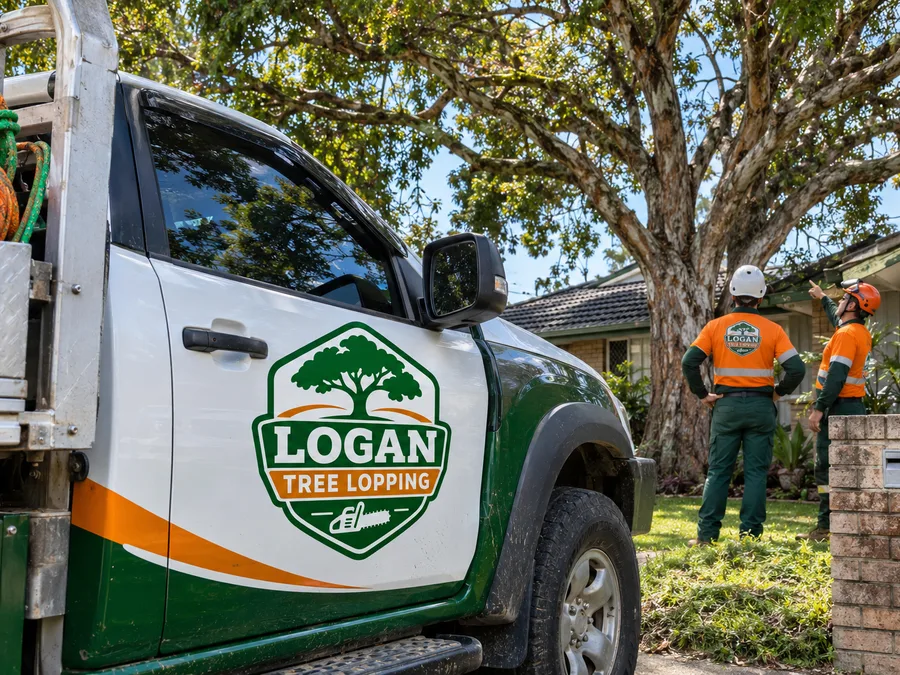
Logan City includes established suburban blocks, acreage properties and busy commercial areas, so access can differ sharply between jobs. In Springwood, mature suburban planting and closely spaced homes can limit drop space. Slacks Creek has residential and commercial properties where traffic, buildings and work areas may affect equipment placement. Acreage around Greenbank can provide more room, although long driveways, gates and soft ground may restrict heavy machinery.
Properties in Beenleigh may have trees close to homes, fences and neighbouring lots, requiring smaller sections to be lowered under control. In Jimboomba, larger blocks do not automatically make removal simple. Distance from firm access and the tree's position near sheds, tanks or fencing still shape the plan.
South East Queensland storms can bring strong winds and heavy rain. Saturated ground may reduce root anchorage and make machinery access harder, while later wind can dislodge branches already weakened by a storm. These conditions are assessed on the day because a method that is safe on dry, firm ground may not suit a wet site.
Emergency tree removal in Logan typically costs about $800 to $5,000 or more. A smaller accessible failure may sit near the lower end, while a large tree on a building, a crane-assisted removal or work outside standard hours can cost several thousand dollars.
Price depends on tree size, structural damage, access, rigging needs, electrical hazards, equipment, disposal and whether the timber is bearing weight on a structure. Emergency attendance can also attract a higher rate than planned work. The exact cost is confirmed after the hazard and work area are inspected.
Move everyone away from the tree and allow more space than the visible branch spread. A damaged tree can fail in a different direction if roots shift or a supporting limb breaks. Keep pets indoors, move vehicles only if that can be done without entering the hazard area, and prevent neighbours or passers-by from approaching.
Do not use a ladder or climb onto a roof near the tree. Avoid chainsaws, ropes and vehicles as improvised pulling equipment. Storm-damaged timber often stores substantial force, and a trunk resting on a building may move once even a small branch is cut.
If powerlines are involved, treat the tree, nearby fences and wet ground as potentially energised. Keep clear and contact Energex. For a life-threatening event, fire or immediate danger to the public, contact emergency services. Property owners should also photograph damage from a safe position and notify their insurer when a home, vehicle or insured structure is affected.
Emergency removal addresses the immediate tree hazard. Building repairs, electrical work and insurance assessment may need separate qualified providers once the area is safe.
If a fallen or unstable tree is threatening people, property or access, describe the hazard so the safest response can be planned promptly.
Call for a Free EstimateResponse timing depends on the level of danger, crew availability, weather, travel conditions and whether electrical hazards must be cleared first. A tree threatening an occupied building or public access is more urgent than stable debris already on the ground. During widespread South East Queensland storm damage, demand and unsafe weather can affect attendance times.
A tree on a roof can often be removed by dismantling it in controlled sections, but the method depends on how its weight is supported. Rigging, an elevated work platform or a crane may be needed to prevent further loading on the structure. People should stay out of affected rooms until the tree and building have been assessed.
Energex should be contacted when a tree is touching powerlines or has created an electrical danger in Logan City. Do not touch the tree, nearby metal fencing or fallen electrical equipment. Tree work can proceed only after the electrical risk has been made safe and the required clearances are established.
The entire tree does not always need removal if the remaining trunk, roots and crown are structurally stable. Full removal is more likely when there is major trunk splitting, severe root plate movement or failure that has left the tree unable to support itself. The decision is made after inspecting the whole tree, not only the broken limb.
Insurance may cover some removal costs when a tree damages an insured structure, but cover varies by policy and circumstances. Insurers may distinguish between removing the part affecting the structure and clearing the remaining tree or debris. Take safe photos, retain written records and ask the insurer what approval or evidence is required.
A crew may clear enough timber to restore safe access first, provided the remaining tree and debris can be left stable. This can be useful on acreage properties around Greenbank or Jimboomba where a driveway is the main route to a home. The agreed scope should state whether full removal and debris handling occur during the same visit.
Work may be delayed when high winds, lightning, heavy rain or unstable ground make tree work unsafe. The damaged area should remain isolated until conditions permit a controlled assessment. In some cases, the safest immediate action is restricting access rather than putting workers beneath a moving canopy.
Tell Logan Tree Lopping what has fallen, what is at risk and whether powerlines or structures are involved. Clear information helps the team plan a safe, prompt response.